
This blog post is by Samantha N., Latinx Services Librarian, and Mary P., Community Engagement Manager of Latinx Services.
Salt Bones by Jennifer Givhan is a phenomenal book, a multigenerational tale about mothers and daughters, steeped in myth, folklore, and poetic prose. It was a Publisher’s Weekly and Book Riot Best Book of 2025, and one of my personal favorites.
Jennifer Givhan will be joining Nuestras Raíces at the Tucson Festival of Books!
-
La Lucha Sigue: Resistance in Fiction
Sunday, March 15 from 1 to 1:55 pm
Nuestras Raíces Stage
Presenting authors: Fernando Flores, Jennifer Givhan, and Ruben Reyes Jr.
She will also host a workshop—Reeling Readers In—on Sunday, March 15 from 10 to 10:55 am in the Integrated Learning Center Room 125AB.
We had the honor of interviewing her over email. Please enjoy our author Q & A with Jennifer Givhan.
Salt Bones is a book that covers many topics and themes with skill, including a vividly drawn setting. It is a love letter to Imperial Valley, aka El Valle, in California, and the region surrounding the Salton Sea, where you grew up. Like Pima County, El Valle is near the U.S.-Mexican border, but the region has its own unique history and ecosystem. Could you say a little about the Salton Sea for any patrons who are unfamiliar with it?
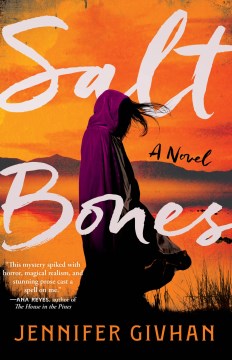
I grew up down the road from the Salton Sea, an ancient lakebed that has filled and emptied over millennia, but whose current iteration has been mislabeled “man-made” or “accidental” since, in the early 1900s, during two series of floods, an irrigation canal from the Colorado River to the Imperial Valley burst its banks. Over the next hundred years, the sea became not only the saltiest in the nation but also one of the most toxic, filled with poisons such as DDT, arsenic, and lead from the pesticides flowing from the surrounding crops. As the sea now dries up due to global warming and water-crisis-mandated irrigation-tightening laws, the playa has been exposed—those chemicals aerosolized and released into the lungs of everyone living in the surrounding towns—making it one of the highest asthmatic and lung-disorder populations in the nation.
The New River flowed behind my house into the sea, and I’d often run down there against my mama’s wishes, watching people fish in its bubbly, foamy broth.
You have written that, several years ago, your comadre told you that the Salton Sea was drying up and the release of toxic dust in its wake would make your hometown in El Valle a ghost town. This is when you decided to dust off an unfinished story, which became Salt Bones. How long did you work on the novel? When did the idea for the story first start?
Yes, exactly. The Imperial Valley brings in billions of dollars in agricultural revenue each year, providing the nation’s winter salad bar since it stays temperate year-round, but most people don’t even realize where it is or how the Salton Sea’s demise has devastated the area and its people. My people. That’s when I knew I had to tell this story. I also knew that I didn’t have much of a platform, but that people love murder mysteries. So I decided to wrap my ecological swansong of a heart and outcry for mi gente in a murder mystery like a burrito!
The idea first came to me over a decade ago, as I’ve long written about my community in my poetry collections and my first novel, Jubilee, which I drafted during NaNoWriMo while nursing my infant daughter when I was twenty-six. I always feel called to write about marginalized places and people—my homeland y gente.
Several of the characters are also inspired by my family. For instance, Malamar is based on my own mama and the stories she told me of her girlhood. She always wanted to be a writer, and I’ve been encouraging her to write for years, but she was so busy with her nursing career—moving from CNA to LPN to RN to finally earning a doctorate of nursing and teaching nurses. And when she finally retired, she began dealing with early-stage dementia. So the stories she has told me my whole life, I am hurrying to write down, because they deserve to be told.
How is the fate of places like Pima County along the border tied to the fate of the Salton Sea?
We are tied together by the same forces that shape so much of the borderlands: water scarcity, extractive economies, and political neglect. These regions are essential—they feed the nation, police the border, absorb environmental damage—but they are treated as expendable. What happens to the Salton Sea is not an anomaly; it’s a warning. When water is diverted, when land is overworked, when policy is made far from the people who live with its consequences, the harm concentrates in border communities first. The drying of the Salton Sea shows us what happens when a place is deemed disposable, and that same logic threatens places like Pima County: environmental collapse followed by public health crises, followed by displacement. Our fates are linked because we are connected by the same systems, and because the people who live in these regions—largely working-class, Latine and Indigenous, and communities of color—are asked to bear the costs of decisions we did not make because we are not represented equally in the government that treats us as outsiders and others when, in reality, we’ve been the backbone and beating heart of this place for millennia.
La Siguanaba is a character from borderlands/Mexican folklore that appears in your book. She is a horse-headed woman, a beautiful woman with a horse skull instead of a face. Did you grow up hearing stories about La Siguanaba? How did you feel about La Siguanaba growing up and has that feeling changed?
I more often heard stories of La Llorona, living so close to the water. She lived in all the abandoned lots I’d run through as a kid—past the date palms with their juicy, purplish-brown dates that looked like cockroaches, across the acequias, and in the surrounding fields where the New River flowed. There was a park I’d run through, with clusters of trees for hiding in. I always felt called by the river and by La Llorona, even though everyone was terrified of her. She made me curious.
In the park, there were horses and pens, and I’d always see them running around and smell their manure. It wasn’t until later that I heard more about La Siguanaba, and she compelled me.
I’ve written about La Llorona in just about everything else I’ve ever written. It was time to consider a new monstrous mama. What most interested me about La Sigua was that I’d heard competing stories. In one, she came for deviant men. I could live with that. But then I also heard she came for children, like La Llorona, and I wondered about that discrepancy.
Why would she come to claim and kidnap children if she was meant to punish men for their wrongdoing? That tension is what made her the pulsing vein of my mystery.
This book also draws inspiration from the myth of Persephone and Demeter, in which Persephone is taken to the underworld, and Demeter, her mother, searches for her. What was it like reimagining this myth set in the borderlands, in a Mexican-American community? How, if at all, did that change your perception of the myth?
My own mama’s brother was actually kidnapped when she was a child, but he was able to escape his kidnapper, run to a gas station, and call his mama, my grandmother. So I think that in many ways, I grew up with the knowledge of this possibility, and my mother was hypervigilant, but her hypervigilance also shrouded a deeper, stickier kind of not paying attention, which meant much of my care fell through the cracks. I was unsafe in ways she hadn’t realized. She was watching for the wrong things. Her own girlhood trauma had built these crawl spaces where she got stuck.
So now I write about trauma. Hers, mine. What happens to too many daughters in a misogynist, patriarchally built, white supremacist society. Add in familial and communal mental health struggles born of poverty, racism, and racial and environmental exploitation, and we’ve got a lifetime of material to explore.
I grew up Catholic and with the myths of our community, such as the La Llorona stories I shared above. But when I got to college in Orange County, that’s when I really started to read more about Western myths—and I fell in love with the poems surrounding Persephone and Demeter, especially Eavan Boland’s “The Pomegranate,” but many others as well. In Boland’s poem, she writes, “The only story I have ever loved is the story of a daughter lost in hell. And found and rescued there.”
That resonated with me on a guttural level. Deep in my insides. Where I grew up often felt like hell, although I love it with a passion and will fight for it again and again in all my stories.
Both my mom as a mother and me as a daughter were lost and rescued there.
I wrote a whole craft essay on it for Writer’s Digest here as well, so this idea of writing to heal trauma on personal, familial, and cultural levels resonates deeply for me and forms the viscera of my poetics.
Throughout the book, there is a motif of the monstrous mother, as seen through multiple generations of mothers and daughters. Mal, one of the main characters, has visions of herself and her mother as La Siguanaba. Mal also believes that every choice she makes as a mother is the wrong one. Monstrous mothers a motif you have explored in previous works, including Landscape with Headless Mama: Poems. What draws you about this theme? What can make motherhood feel monstrous?
I’ve tried so hard to excavate the crawl spaces and not let my own hypervigilance blind me to the dangers—
Only to find I’ve failed in other ways.
We can’t keep our kids safe from everything.
We shouldn’t even try.
Not from everything.
That’s terrifying, though, isn’t it?
And in some ways—liberating.
All my work is about this because I’ve been writing my way through motherhood. It’s the roadmap I needed to stay tethered to this place and not let my own trauma-induced demons steal me from my children. And I’ve offered it as ofrenda and surrealist survival guide for everyone else who has needed it. I’ve given my heart on the page with so much love and hope.
Perhaps the other side of the “monstrous mother” is the fierceness of their love for their children. To me, this is one of the most powerful aspects of the book. Mal searches for her daughter with a fierceness that is awe-inspiring and reminds me of several valiant mothers I have seen in the news, like Miriam Rodriguez Martinez and Angeli Gomez. Where does that fierceness come from?
My own mama. Amen.
Salt Bones weaves together multiple genres – thriller, horror, mystery, magical realism – seamlessly. What was it like incorporating elements of different genres in your work? What was most challenging about it, and what was most rewarding?
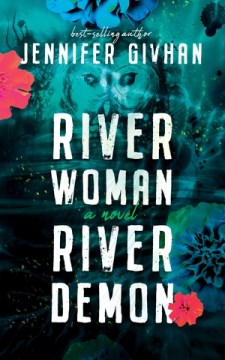
I honestly didn’t know I was ever writing horror until people told me my stories terrified them, keeping them up at night. Before that, I was just writing my experiences and my heart. I’ve heard similar things from other writers of color. So on one hand, I’ve simply pressed harder into the craft, storytelling, and poetics already sewn into the fabric of my upbringing.
On the other hand, I’m deeply aware that Latine stories and experiences are sorely missing, erased from the mainstream publishing world. So when I wrote River Woman, River Demon, for instance, it was very clearly my Chicana Girl on the Train or Gone Girl. It’s important to me that Latine people are represented, and that our stories have a chance to be picked up by national book clubs, appear on GMA, and all that. So I do try to make sure my stories are fast-paced page-turners that will hook audiences and not let them go. Grab by the throat. Dig into the heart.
But in terms of blurring genres, that’s just my own voice and style. I have to stay true to myself, and I don’t fit neatly into any box or category. I write messy and wild and feral, and I love characters and stories that are likewise. I’m a borderlands writer through and through.
One of the characters – Amaranta – shares a name with a character from One Hundred Years of Solitude by Gabriel García Márquez, perhaps the most famous work of Latin American magical realism. It is also about multiple generations of a family following similar patterns generation after generation. Have you read this book? Has it inspired your writing? If so, how?
Ha! What a wondrous synchronicity! I haven’t read this magnificent book since I was finishing my Master’s in English at Cal State Fullerton, when I was raising my newborn son—I was twenty-three at the time—and had created, with a mentor there, a class on Latina motherhood. In that class, I read One Hundred Years of Solitude, The House of the Spirits, Like Water for Chocolate, So Far from God, and so many other classics.
When Amaranta came to me, I hadn’t even remembered she shared a name with another character I love! But I feel like my antepasados are always reminding me. They have such a sense of humor. I need to go reread the book—and watch the adaptation—now.
I also hadn’t remembered that the matriarch of Ana Castillo’s novel that shaped me on such a DNA level was also a butcher like Mal until I taught it again, years later, when I was a visiting professor in the MFA program at the University of New Mexico. I laughed so heartily when I rediscovered that. I come from such a rich cultura, and such wise, strong foremothers and forefathers. I’m incredibly grateful for the Latine literary canon.
When did you first start writing?
When I was a little girl. I’d write plays and enlist my big brother and cousins or all the neighbors to help me showcase them for the grownups. And then I wrote poems and stories, often for my friends and family, as presents to them. I filled notebooks with story ideas and the drama of growing up. And I told everyone I was going to be a writer.
I’m so grateful for that little girl who believed in me and still does. So damn grateful.
What advice would you give aspiring writers?
Never, ever give up on yourself, your voice, your stories, your heart. Your voice matters, now more than ever in the age of artificial intelligence and attacks on our communities and personhood. You must never stop singing or believing in your songs. Your voice might be what saves someone else. I firmly believe in you.
What is the most important thing you hope people take away from reading Salt Bones?
Our communities, our families, our land, our stories, our survival and our healing—
Are vital. As are we.
About the author
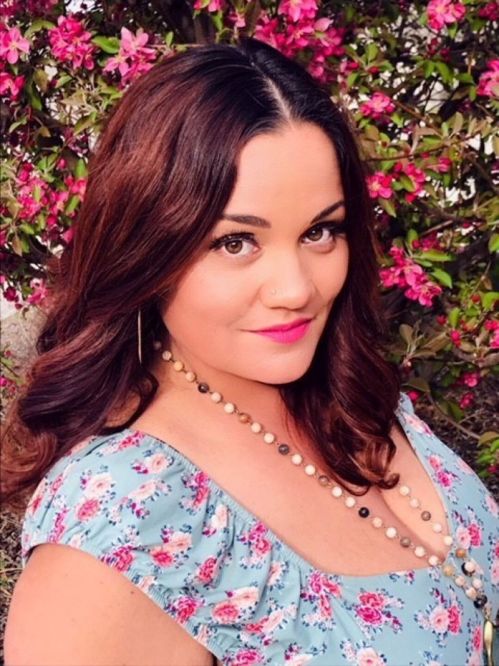
Jennifer Givhan is a Chicana/Indigenous author from the Southwestern desert and a recipient of the NEA and PEN Emerging Voices fellowships. The Los Angeles Times called her novel Salt Bones “a triumph... One of the most masterful marriages of horror, mystery, thriller and literary writing.” It was a Publisher’s Weekly and Book Riot Best Book of 2025. Givhan has won an International Latino Book Award in Rudolfo Anaya Latino-Focused Fiction and holds a Master’s degree from Cal State Fullerton and a Master’s in Fine Arts from Warren Wilson College.
