
This blog post is by Samantha N., Latinx Services Librarian.
Join the Nuestras Raíces Team at Flowing Wells Library on December 13 at 3 p.m. for a live musical performance by TucSon Jarocho!
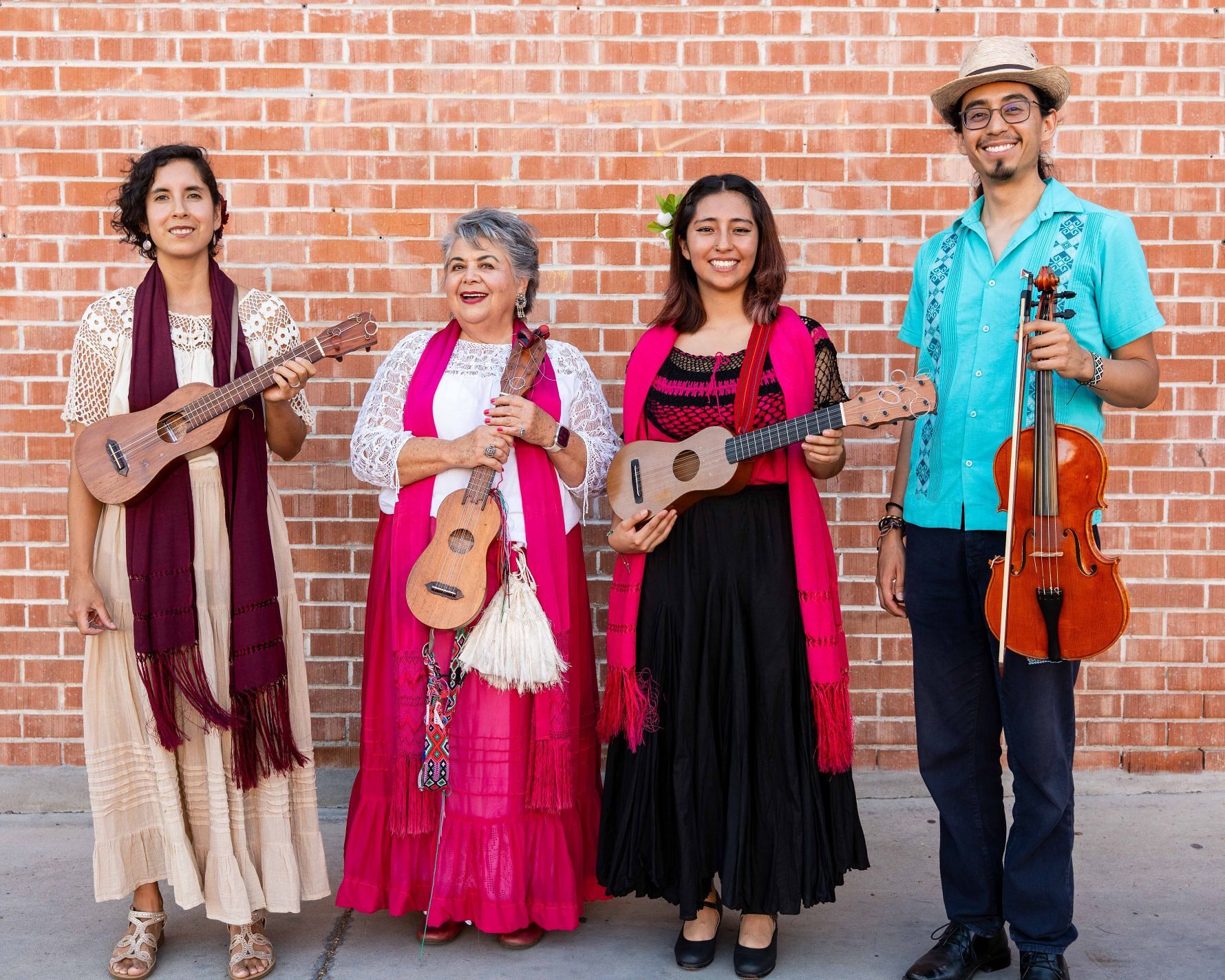
TucSon Jarocho is a local group that performs the musical style of “Son Jarocho.” As you can see, their name is a clever play on words. Dr. Gabriela Ocádiz, a member of the group, explained to us over email that Son Jarocho is “a traditional music and dance style from Veracruz, Mexico, blending Indigenous, African, and Spanish traditions.” In fact, Son Jarocho is often translated as “the sound of Veracruz.” TucSon Jarocho called it a “genre of resistencia, rooted in community gathering and cultural memory” on the Tucson Meet Yourself website. I have also seen Son Jarocho described as “a musical demand for social justice and lyrically picaresque resistance.”
Son Jarocho is a beautiful musical tradition, and if you haven’t heard it before, you are in for a treat. Chances are, though, you have heard it. There is some Son Jarocho music on the Frida movie soundtrack, in a particular the song El Conejo. You can listen to El Conejo from the soundtrack on Hoopla. Perhaps the most famous Son Jarocho song, though, is La Bamba.
It’s almost impossible not to dance when you hear the opening bars of the song, and that’s what the song is calling the audience to do: to dance.
Para bailar La Bamba
Para bailar La Bamba
Se necesita una poca de gracia
Una poca de gracia
Pa’ mí, pa’ ti, ay arriba, ay arriba
Y arriba, y arriba
Por ti seré, por ti seré, por ti seré
To see a translation of the lyrics, visit this link.
La Bamba has been around for a long time before Ritchie Valens made it world-famous, and you can learn more about the song’s history from this interesting blog post on the Library of Congress website.
The instruments that TucSon Jarocho plays are different ones from the typical instruments you might have heard of. For example, typical Son Jarocho instruments include jaranas, quijadas de burro, panderos, and tarimas. Shoes and boots are an instrument too, since part of the Son Jarocho tradition is the dance style “zapateado,” derived from the Spanish word for shoe (zapato). The sound of the steps from zapateado dancing are incorporated into the music itself. Many Son Jarocho groups, like Caña Dulce y Caña Brava, also play with a harp. Of course, there is also the group Tlen Huicani, whose musical style differs from TucSon Jarocho’s, but who nevertheless tirelessly brings the sound of Son Jarocho and other Mexican musical styles to the world.
If you want to get a taste of Son Jarocho music and get excited for the event, check out this playlist curated by yours truly. You can also check out this web page from Smithsonian Folk Ways Recordings. For more educational resources, visit this page from the Carnegie Hall website.
Aside from great music, there will also be pan dulce and fun activities for the whole family.
¡Viva la cultura!
