
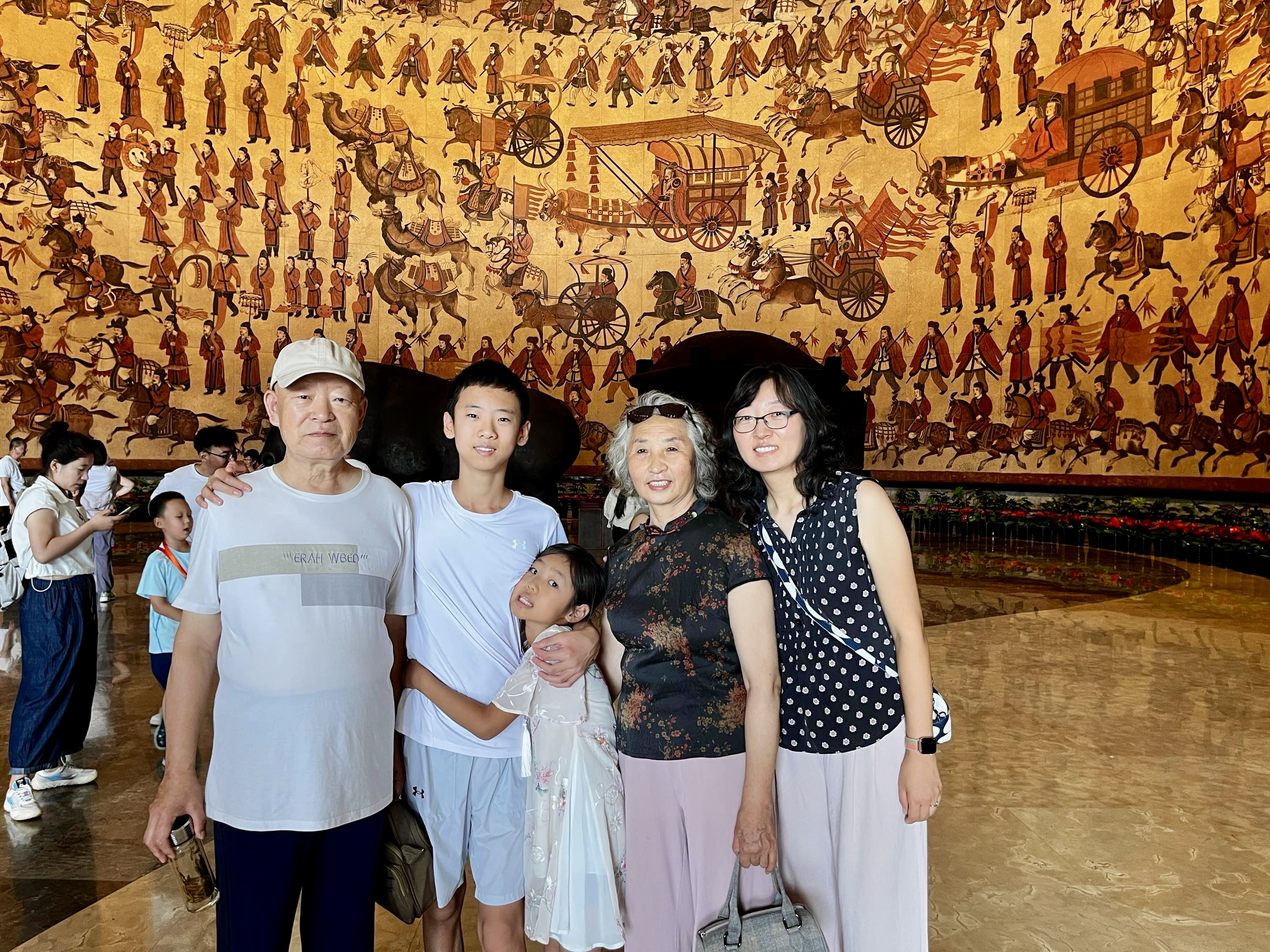
Ting Ting Su works at Oro Valley Public Library. She was born in Datong City, a major historical and cultural city in northern Shanxi Province, China. Ting Ting moved to the United States in 2010 with her husband, who was doing a postdoctoral fellowship.
They came to Tucson in 2016. Ting Ting has two children, and she likes hiking and drawing.
Traditions of Chinese New Year
In China, the Lunar New Year, also known as the Spring Festival (春节), marks the beginning of a new year on the traditional lunar calendar. It is one of the most important holidays in Chinese culture. 2026 is the Year of the Horse!
Chinese New Year's Eve is an occasion for Chinese families to gather for the annual reunion dinner; every family would thoroughly clean their house, symbolically sweeping away any ill fortune. Windows and doors may be decorated with red paper-cuts and couplets representing themes such as good fortune, happiness, wealth, and longevity, which symbolize good wishes and luck for the new year ahead.
Source: Wikipedia - Chinese New Year
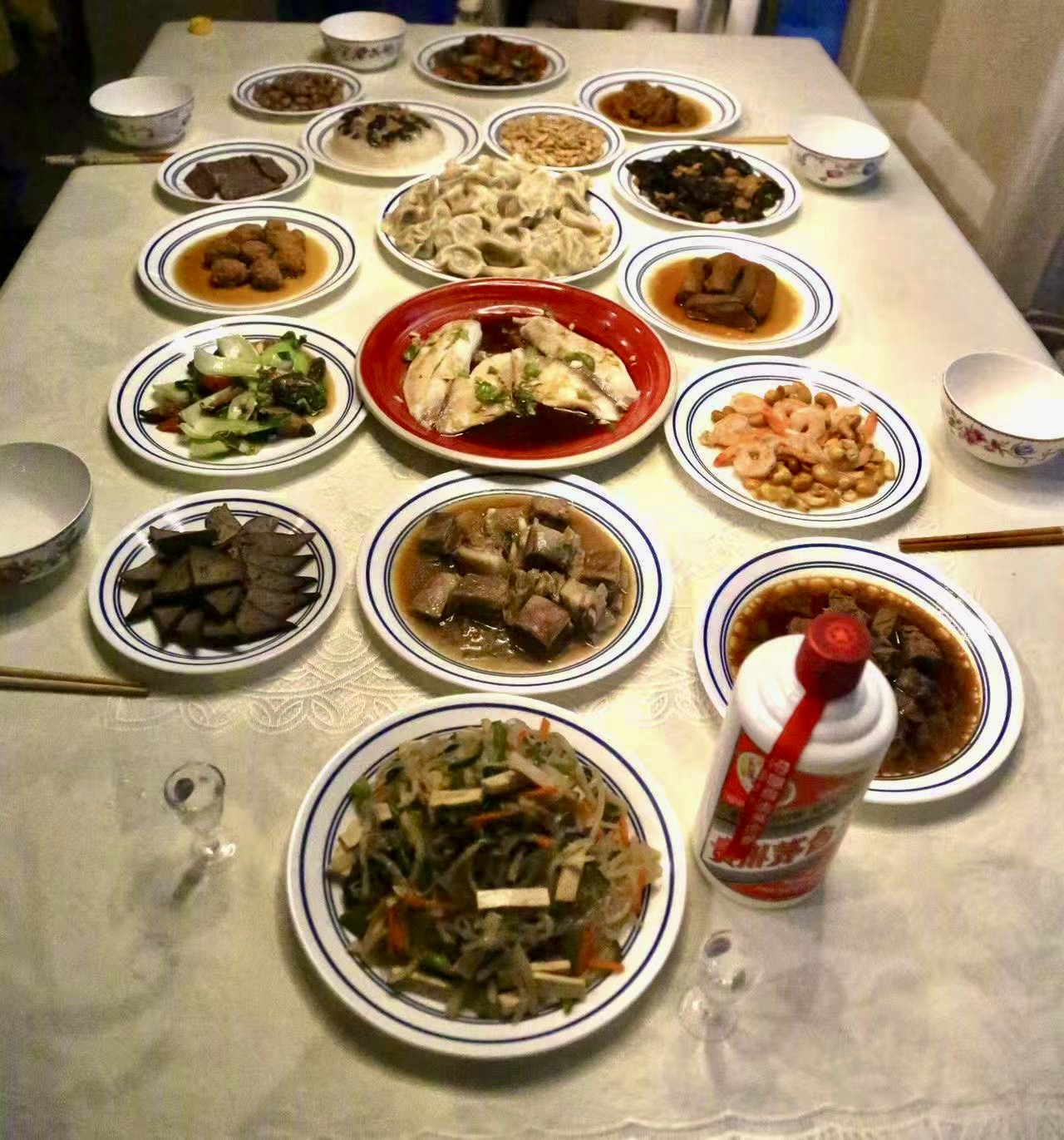
Throughout China, different regions celebrate the Lunar New Year with distinct local customs and traditions. In Ting Ting’s hometown, families enjoy a festive meal on New Year’s Eve that includes dumplings, buns with shapes, and fish. By tradition, the fish is not eaten completely, symbolizing abundance in the coming year. This custom reflects the Chinese saying 年年有余, meaning “May you have abundance every year.”
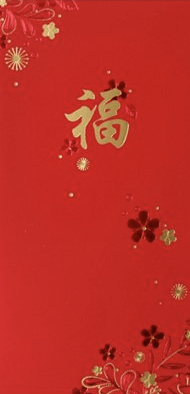
On New Year’s Day, people visit relatives and friends, and children typically receive gift money known as 压岁钱. Historically, the term 压祟 referred to driving away bad luck. Today, this money is given in red envelopes called 红包 (hong bao).
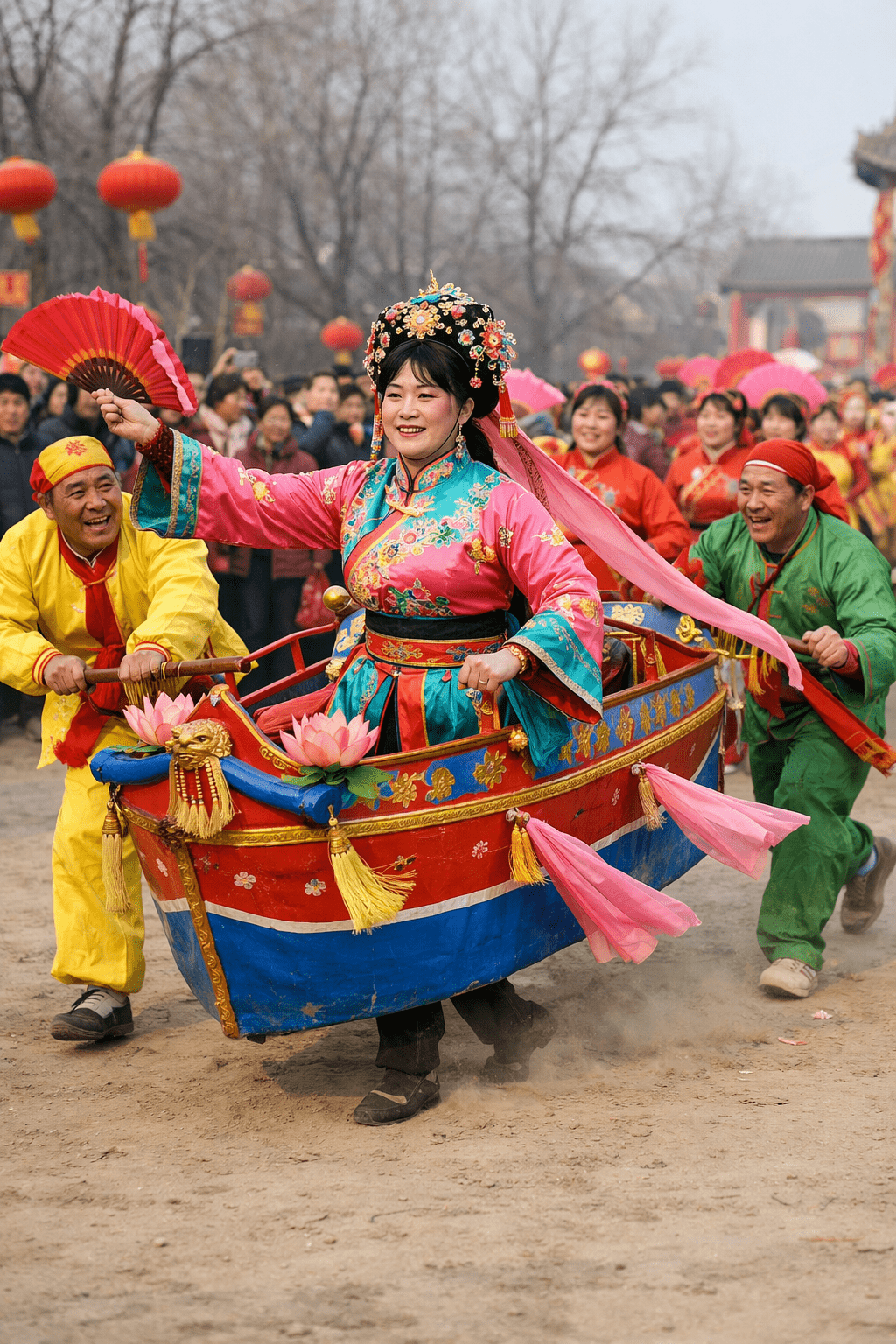
In the days following New Year’s Day, many communities hold festive parades featuring lion dancers, stilt walkers, and traditional land boat dancers. The Land Boat dance is a traditional Chinese folk dance that originated in northern China. The main performer wears a lightweight, decorative “boat” frame around the waist, creating the illusion that they are standing or moving inside a small boat. This kind of dance expresses a wish for prosperity, peace, and happiness.
Ting Ting’s traditional food and recipe
One of the Chinese New Year foods Ting Ting likes to share is steamed buns. These buns are a staple of the holiday table and are enjoyed alongside other celebratory dishes. They are carefully crafted into symbolic shapes such as fish, rabbits, flowers, and other animals, each representing good fortune, abundance, and happiness for the coming year.
Flower buns recipe from Ting Ting
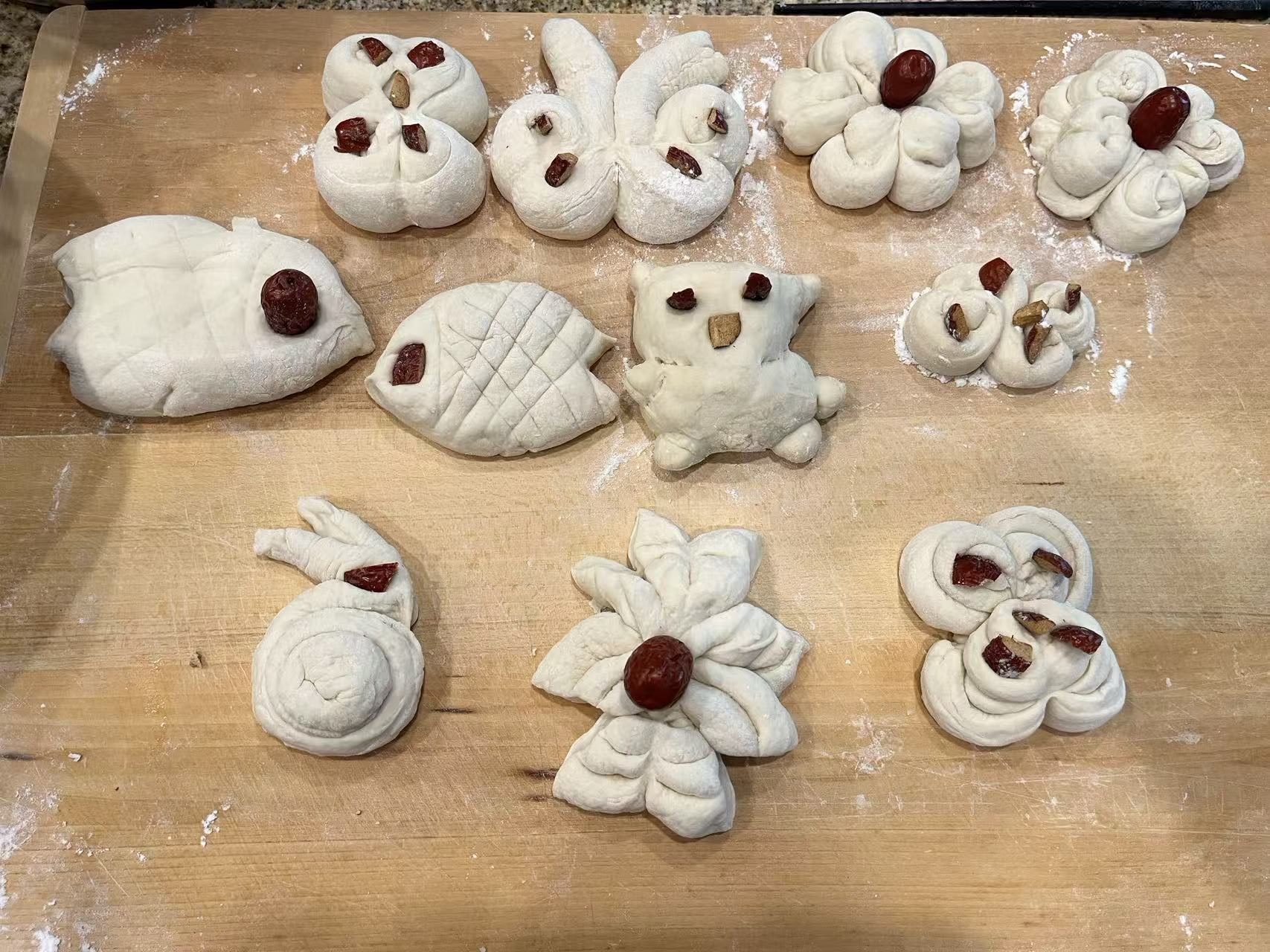
This recipe makes four red date flower steam buns.
Ingredients
- Warm water 250g
- Yeast 4g
- All-purpose flour 400g
- Red dates 4
Instructions
In a large bowl, add water, flour, and yeast, and mix the ingredients.
- Knead into a soft dough.
- Cover with plastic wrap and let it ferment at room temperature until doubled in size.
- Gently knead the dough, divide it into 8 small portions.
- Take one portion and roll it into a long strip about one foot in length, then coil it from one end inward to form a round disc.
- Place two discs side by side, press them together in the middle with chopsticks and place a pitted red date in the center. The flower shape is now formed.
- Arrange them in a large steamer with enough water. Steam over high heat for 15 minutes.
- Turn off the heat and let them rest for 10 minutes before removing and serving.
Ting Ting's book recommendation
Chelsea’s Chinese New Year by Lisa Bullard.
The book describes how Chinese people celebrate the Lunar New Year from a child’s perspective, highlighting preparations, customs, and traditional ways of celebrating. It also includes explanations, either woven into the story or presented in text boxes—about historical facts and legends. The book is short, but it is highly educational.
