
In this blog post, Sarah E., Joel D. Valdez Library, interviews Dominique Holly, director of the Driftwood Quintet, and Sean Avery Medlin, poet, musician, and teaching artist.
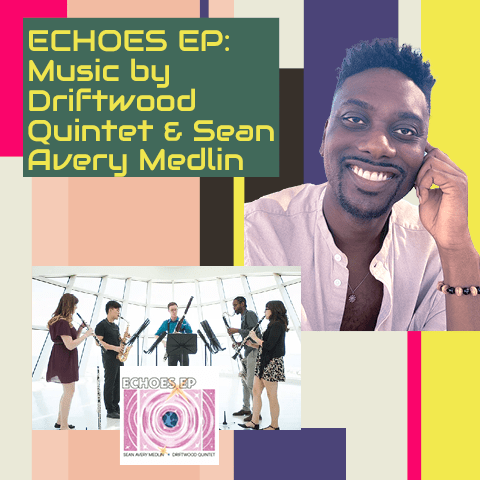
ECHOES EP: Music by Driftwood Quintet and Sean Avery Medlin
Saturday, February 7 from 3 to 4:30 pm
Murphy-Wilmot Library, 530 N. Wilmot Rd.
Program brought to you by Pima County Public Library's Pride and Kindred teams.
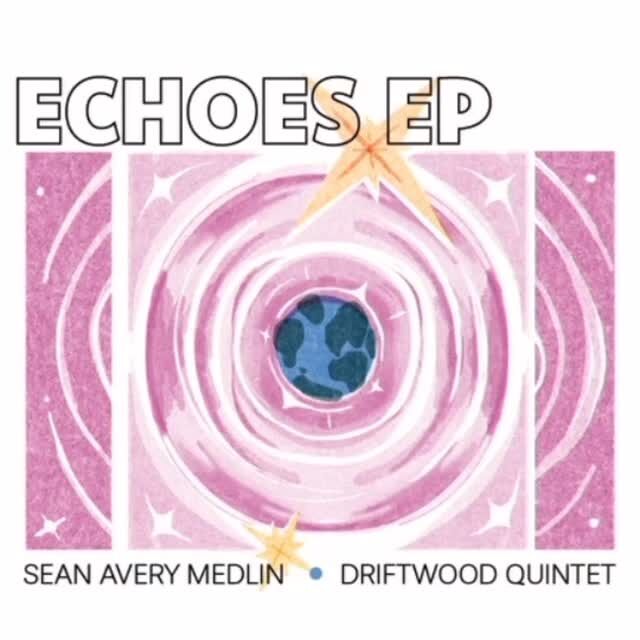
Join us for a music performance by poet Sean Avery Medlin and wind instrumentalists Driftwood Quintet of their collaboration ECHOES EP. Released on March 1st, 2024, ECHOES EP features both new and previously published poems by Medlin set to original music written by Driftwood member Ben H. Paley and Driftwood collaborator Kevin E. Kerr.
A melding of Chamber Music and Spoken Word, ECHOES EP is a special fusion that alights both the heart and the ear. Three of the poems on the EP can be found in Medlin's collection of poetry and essays, 808s & Otherworlds: Memories, Remixes, and Mythologies.
Stick around after the show to have your books and albums signed by the artists.
Can you introduce yourselves?
Dominique
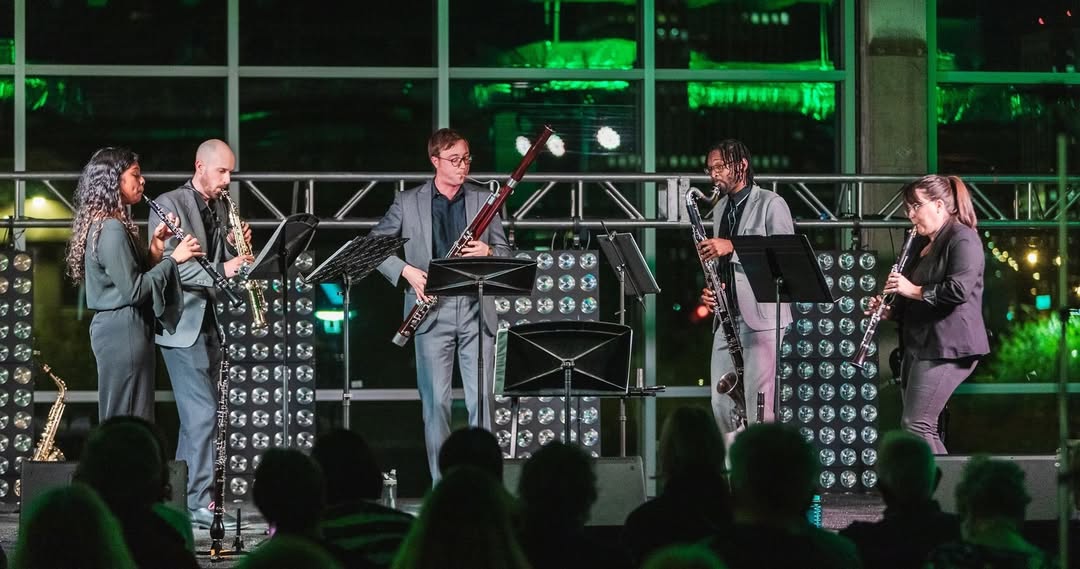
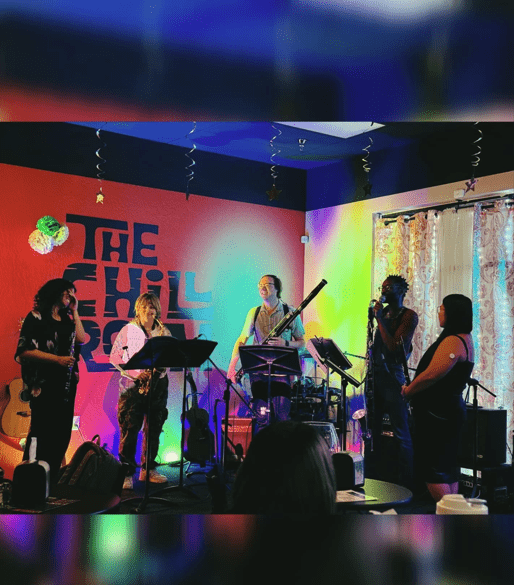
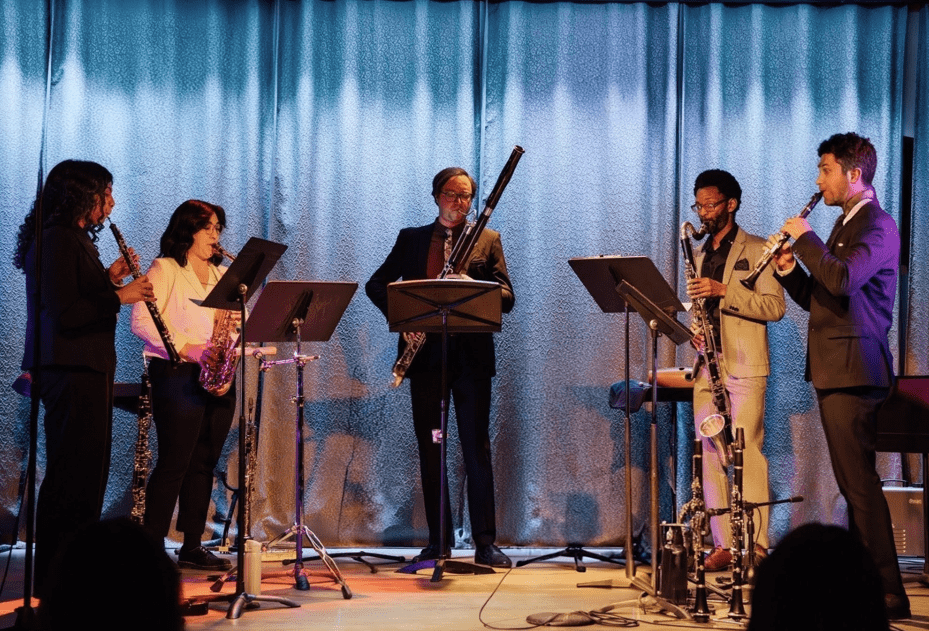
My name is Dominique Holly. I am the director of the Driftwood Quintet. We're a chamber ensemble that's based mainly in the metro Phoenix area. We perform a wide variety of music ranging from traditional classical music to contemporary classical music to pop music which would be kind of like video games, movies, TV shows. And we also do a lot of collaborative-based work oftentimes with singers. This current project with Sean was our first journey into performing with a live poet.
Sean
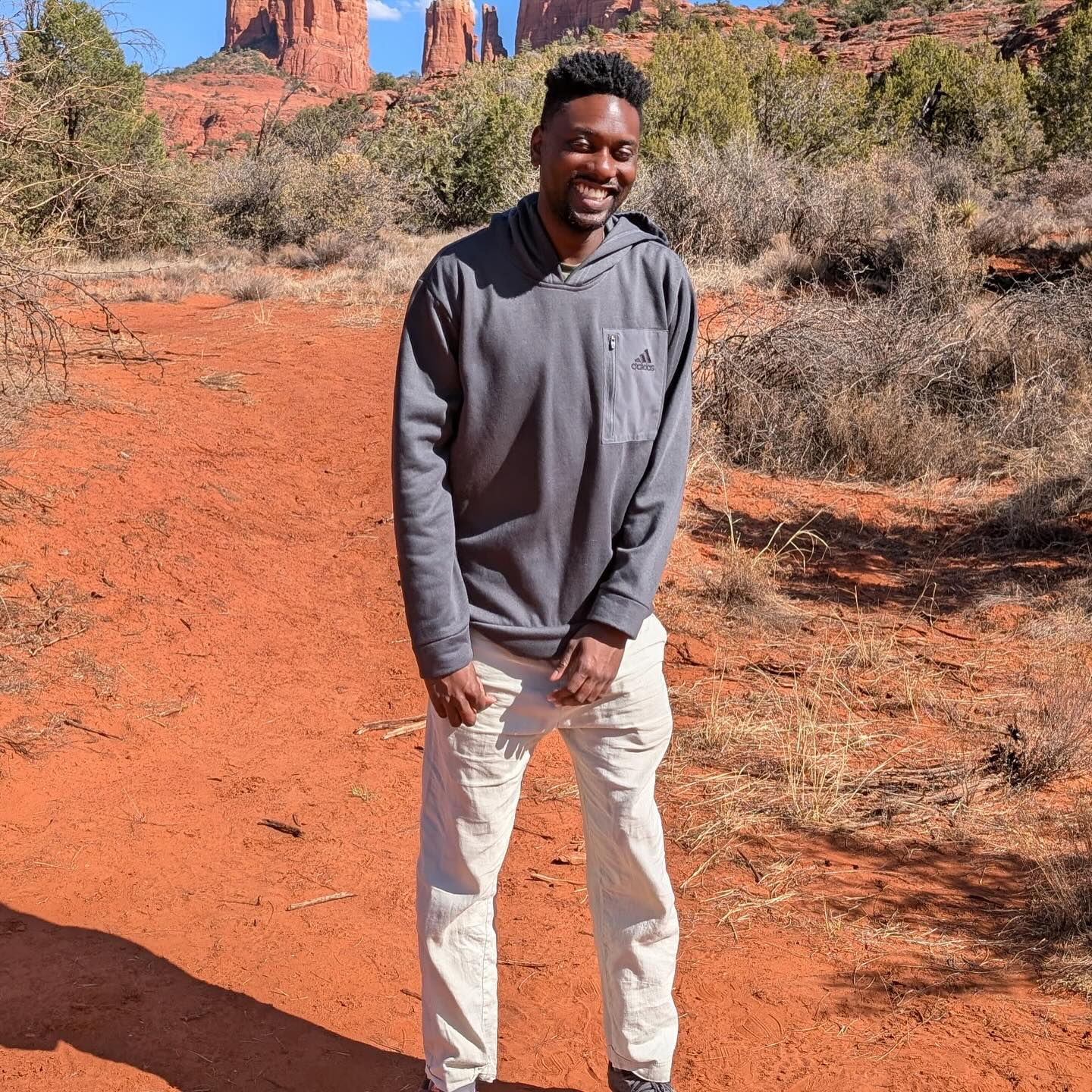
I'm Sean Avery Medlin. I'm a poet, musician, and teaching artist in Phoenix, Arizona primarily. It's my first time doing a poetry collaboration like this. As a musician, I primarily make rap music. I'm very used to being recorded and writing lyrics. But in terms of setting my poetry to chamber music specifically, that was a brand new experience for me and was really rewarding.
How was the project born?
Sean
I've had the opportunity to work with Driftwood for many, many years now, starting with this thing called the poetry orchestra. That's the first time I got to work with Dominique and many of the musicians who have been in or are currently in Driftwood.
Dominique
For me as the programming director for Driftwood, whenever I notice something that I think would be a fun project for Driftwood down the line, I make a mental note and wait for a time when that project would be viable. Sometime later, when I was putting together a project for Driftwood and I wanted to use poetry, my first thought was: “[that last] project with Sean worked really well.” So we revisited that.
A lot of times these projects, they evolve over time. They take a lot of time to develop and ruminate. We did one season with just half of this EP. That was music written by Kevin. And then the next season we wanted to make it a little bit longer. Our bassoon player Ben actually jumped in next and wrote the rest of the music that went along with Sean's work. That was a long process from pre-COVID times to the first season doing half of it to the next season doing the other half.
We sat down with one of our friends and we did a little home studio session. It was really fun to try this approach where it was more of a DIY recording setup in our bassoon player's living room. Once we had that, we did the EP, did the house show release, and the rest is kind of history.
How did you approach blending spoken word and chamber music together?
Sean
Kevin and Ben—they're both great composers. They were both able to write the music as a demo in Garageband and send that to me so that I could essentially practice the poem to a digital rendition of what the group might sound like. And that's how we worked out the kinks. That's how we knew we needed to extend this section, or completely take out this section, or scrap that idea for a new idea, etc. With both of them, it was a pretty fast process. No more than a month of back and forth sending tracks, voice notes, recordings, and then finally getting in the room with Driftwood with the sheet music to try it with the actual band. It was very, very collaborative.
Dominique
Just like any artist, Kevin and Ben have very different writing styles. Kevin's music can lean more towards contemporary classical aesthetics—which means it can be a little bit more dissonant and a little less straightforward. He also has another style where he writes really, really beautiful harmonies and melodies. And then Ben's musical writing is much more influenced by pop music. It's much more straightforward as far as the harmony and the melody. Those are really interesting, but very much based in the harmonic language that the average person would be more familiar with.
One big question was: what order are we going to put these tracks in? Since Sean's poetry is the throughline for all this, it actually worked really well to mix and match the order of the pieces. It really helps the album flow and keep the listener engaged.
Once the movements were composed and you began rehearsing together, did you have to make any changes?
Dominique
I really like the idea of music being fluid and not so static. What I mean is that every time you sit down to play something, it's more interesting for us as performers if it's a little different every time. As musicians, we're not robots, so we don't always play the same thing. And same for Sean. We're always trying to meet and match each other.
What's really cool about working with Sean is that he's not just in his own world, he's actively listening to us as he's performing. So to answer your question, in most of the rehearsals, it was just getting that back and forth familiarity cemented.
I'm curious about your performances and how they vary. Do you find yourselves responding to the audience?
Sean
I'm definitely always reading the crowd in terms of what they're responding to, what they're not responding to. And that helps me decide my pace, my intonation, what I put emphasis on, if I want to repeat a certain line at a certain time.
I’m balancing three different things: the music that the quintet is playing [and] the audience’s response. But then I'm also balancing where I'm at in the moment, how I feel about the poem, how I feel on that day, if I really want to yell this part like I usually yell or not, all of those things. My ultimate goal is to be as in tune and aligned with the quintet as possible so that our timing is synchronous.
How do the instrumentals and words relate in your music? Would you say that the relationship is a literal translation or something more interpretive?
Sean
For both [composers], I'd give them the text and an audio recording of me performing it. Like this is the general tempo, the general pace, the general emotionality that I perform this with. I'd also give them some simple notes like “this should be a mostly upbeat song,” or “this would be great if it was a bit dissonant.” A more general direction. But each of them really took it in their own complete ways.
Ben knows a lot of pop music and is actually a fairly adept student of hip hop. Working with Ben, there was one specific song where Ben was able to interpolate the melody of a specific Southern rap group. But on the flip side, working with Kevin, he was able to pull from contemporary Black composers and use some of their work to inspire what he was writing.
I think that they both tried to really write something that is a response or a match to what I'm doing in the poem. It's all kind of interpretive. You asked about translation versus interpretation. I think it's both. It's responding and it's also adding on.
Dominique
They both are trying to be like, in a sense, mirrors to your text. But the mirror that they're using is uniquely them. They both came to the idea of sampling. With Ben, it was in how to make trap music. [He] found that song, remixed it, and put it into that movement. And Kevin's way of mirroring that was to find black composers that he was inspired by and work those melodies into the song. I love how, in the end, not only was this a thinking about Sean's music, but also a contribution of each person's voice and referencing and contextualizing the words as well.
What themes emerged as a result of your collaboration?
Sean
The black experience, for sure, is a major theme. Another theme that's pretty important throughout is this idea about youth, this process of becoming a person and all of these social forces that are shaping and pushing us in certain directions.
Another big theme, as cliche as it might sound, is love. Different kinds of love. There's familial love in the EP, there's self love in the EP. And there's also a deep interrogation, specifically in one piece called “Siren Call”, of what intimate love is and how to best show up for the intimate physical side of love.
Another theme is literally the title, Echoes. When me and Ben were trying to come up with the title, I just decided to look for the word that repeated the most in every poem. The word that popped up the most was “echo” or “echoes.” For some reason, I was using that word a lot in these pieces.
And it makes sense with everything that we're talking about. The historical experience of being Black—that has a literal sort of echo throughout time where the past is still very much heard and felt in the present. Thinking about adolescence and growing up, the things that you experience as a young person—they shape who you are throughout the rest of your life. Those experiences echo throughout the rest of your time here on this place called Earth. I think that echoes is a bit more abstract of a theme, but it is literally a word that you hear multiple times in the project as a whole. I thought that was really important and powerful in how we arrived at the title.
Dominique
And the word echoes, it's a word that works on many levels for us. When you think from the perspective of music and sound, echoes, music is vibration. Echoes are vibrations that are repeating. And there's even times where that idea of echoes is used, like in the last track, which is the title track. Instead of being the whole quintet, it's just Sean, myself, and Ben. It's just three of us, the poet and two instruments. In the instrumental part, Ben and I are just echoing each other, literally, in the musical sense.
The idea in that movement is Ben will say something and then I'll say it back musically. And it's not always the same. I think that's a perfect way to end it, because it really does a good job of encapsulating how we affect and interact with each other. It's not always in the one-to-one ratio that we think it might be. It's like life is not so straightforward. We can't always know what to expect, even if we're going off of past experiences. It's really beautiful.
What can folks planning to attend the show anticipate?
Dominique
When I'm going to go see a new artist, I'm always on the fence of whether or not I should binge all of their music or come with fresh ears. [The EP is] available to stream everywhere [or] you could purchase it on Bandcamp. So you could listen to it beforehand, get familiar with the music, and then come to the live show and experience how things are different in the live setting. Or you could come with fresh ears, and not know what you're going to be in store for. I think that's a journey all on its own.
Sean
Some of the pieces in ECHOES are from my collection of poetry and essays, 808s & Otherworlds: Memories, Remixes, and Mythologies. Other poems were published in other places. Online magazines, things of that nature.
There is one specific piece, which is “Echoes”, that I wrote just for the EP to help tie it all together. After I discovered that “echoes” was already in almost every poem anyway—the words “echo”, or “echoes”, or “echoing”, I was like, “I'm just gonna write a whole piece called Echoes and tie it all together.” It was one of the only times in my experience putting together a project where I felt like I was really able to put a bow on the ending.
Dominique
The first track, Driftwood, was another piece that was written when we were doing a project with Sean before the ECHOES project came to full fruition. I remember Driftwood was at a performance and Sean was waiting while we were performing other tunes. He's like, "Hey guys, I wrote this piece inspired by you." So the EP is bookended by two spontaneously created poems in reaction to the work itself.
To find more information about Sean Avery Medlin and Driftwood Quintet, visit superseanavery.com and driftwoodquintet.com. Find them on Instagram at @blackvenusian and @driftwoodquintet.
